Lindy West and Jim Norton’s public dispute
Shrill: Notes from a Loud WomanLindy West and Jim Norton’s public dispute brought a debate about rape jokes into a televised confrontation over comedy, accountability, and the consequences of speech. West argued that jokes do not exist outside social life: they can reinforce misogyny and make women’s experiences harder to name. Norton defended comic freedom and questioned whether comedians should face consequences for material audiences regard as jokes. Their exchange became a public test of those positions, and the harassment that followed made the stakes less abstract. Norton eventually asked fans to stop abusing West, but he did not accept her central claim that misogynist comedy and misogynist responses were connected.
Background and Invitation
The debate took shape as West was challenging ideas about both comedy and fatness. In the mid-to-late 2000s, Dan Savage’s writing about the so-called obesity epidemic helped prompt her to examine how public concern about health could become a rationale for stigmatizing fat people. West describes trying to recognize her own humanity outside judgments about her body. That experience informed her opposition to comedy that treated marginalized people as convenient targets while presenting itself as neutral or merely truthful.
In a cab on the way to JFK after a New York work trip, West received a call from her friend W. Kamau Bell, who hosted Totally Biased, a weekly FX show produced by Chris Rock. Bell proposed a televised debate about rape jokes, pairing West with Norton. West was reluctant: Norton was well known in dark-comedy and Opie & Anthony circles. Bell assured her that Norton was capable of conversation, and West agreed to take part.
Before the taping, West and Norton met backstage. Norton told her that he liked her essay How to Make a Rape Joke and believed they agreed on more than they disagreed. Their initial rapport sharpened the contrast with the framing of the broadcast. Introducing West to an audience that might not know her work, Bell emphasized that she had called out comedians and was ready to put Norton on blast. The introduction left out West’s longstanding interest in comedy and her own comedy writing and performance. She felt the framing positioned her as a combative feminist confronting a comedian, rather than as a comedy writer making an argument about comedy.
Competing Claims on Comedy
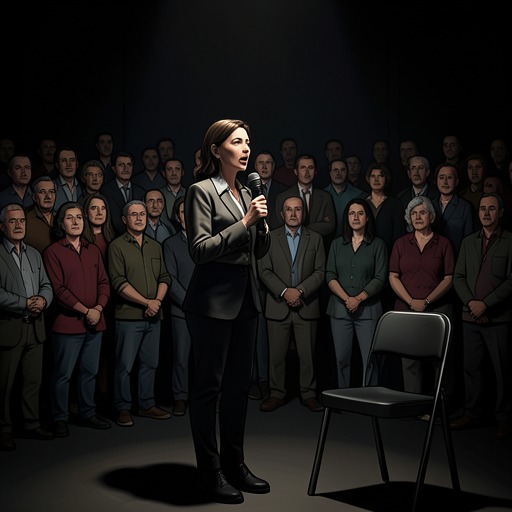
Norton argued against restricting what comedians could say and invoked the difficulty of drawing boundaries around humor. West opened by separating legal censorship from social accountability. She was not arguing that comedy should be legally censored; she was arguing that people could criticize a joke and its effects. For her, a comedian’s freedom to speak did not require an audience to withhold judgment or refrain from responding.
The disagreement became concrete when Norton described complaints to advertisers as the kind of trouble he objected to. West saw that position as accepting criticism only when it could not produce meaningful change. She defended boycotts and advertiser pressure as forms of public leverage, distinguishing them from efforts to restrict speech through law. In her account, accountability meant that people could object to a joke and work to change the culture around it; it did not mean that comedians were forbidden to perform it.
West also challenged the idea that jokes could be separated from broader structures of power. When Norton’s defense returned to the claim that jokes were jokes, she argued that comedy could both reflect and reinforce social conditions. She invoked the history of racist comedy to contest the suggestion that speech has no bearing on the lives of the people it targets. The dispute, as West presented it, was not about whether humor existed, but about who was expected to absorb its costs and whose account of those costs was considered credible.
The Stakes Beyond the Studio
West brought the Steubenville rape case into the discussion as an example of how jokes can circulate alongside real violence and public indifference. News coverage had described a teenage girl’s assault at a party, while young people shared recordings and made jokes about it online. West asked the audience to consider a woman who might be deciding whether to report an assault while hearing rape treated as a source of amusement. Her point was that laughter could intensify, rather than release, the pressure surrounding such experiences.
The debate also exposed a difference in how West and Norton understood consequences. Norton accepted that people could write critically about comedians but objected to efforts aimed at advertisers. West regarded such pressure as one of the few available means of influencing institutions and public culture. She rejected the implication that protecting comedy required protecting performers from professional or reputational consequences. That disagreement made the broadcast about more than the content of individual jokes: it concerned who had the authority to define harm and what forms of response could count as legitimate.
At the close, Norton joked that he and West should make out. West saw the line as a sexualizing punchline delivered during a discussion about women’s dehumanization in comedy. The segment ended before she could make all the points she had prepared, and she later felt that the allotted time had passed too quickly. The joke nevertheless became a telling instance of the very tension she had been describing: a discussion of misogyny could itself turn a woman into a comic object.
Harassment and Partial Convergence
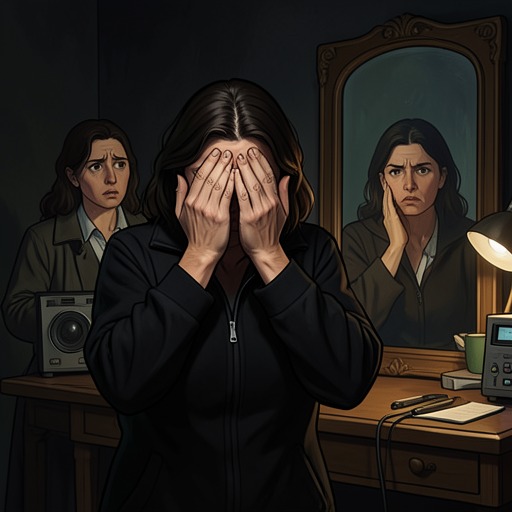
After the broadcast, West faced sustained online abuse. As the dispute became a source of attention, some of the comedians she admired publicly supported her. Norton, apparently troubled by the abuse being directed at her in his name, wrote an essay asking his fans to stop. He condemned rape threats and distinguished disagreement with West’s opinion from attacks on her. He also discussed rape culture on Opie & Anthony. West was grateful for these interventions, while noting that women who had made similar arguments had received abuse rather than praise.
The response did not settle their underlying disagreement. West later sent Norton links after a listener bombarded her with graphic images and other users amplified the harassment. Norton’s reply invoked Bill Cosby to argue that comedy did not determine how people behaved. West rejected that separation, reasoning that comedy and the internet were part of real life. She interpreted Norton’s refusal to concede the connection as a limit in their exchange: he could object to the abuse directed at her without accepting her account of how misogynist comedy helped normalize the attitudes behind it.
The debate’s online afterlife made the conflict unusually visible. Three years later, the clip continued to attract comments, and West described its response as a case study in online misogyny. At the time she wrote, the segment had received 404,791 views and 6,745 comments. Many comments used derogatory language or focused on West’s body and her reaction to Norton’s closing joke. She understood the attention less as interest in a niche argument than as punishment for a fat woman speaking authoritatively to a man and refusing to back down.
Consequences and Significance
West identified small changes after the dispute: comedians became more careful when discussing rape, and audiences grew more willing to groan at jokes they found harmful. She considered those shifts evidence that public criticism could affect comedy, even incrementally. She also connected the debate to the material risks that can sit behind arguments about supposedly harmless speech. In a separate episode, a comedian named Dave brought a knife and a gun to an open mic because he feared that West’s husband, Ahamefule J. Oluo, might confront him. West presented that threat as a stark counterexample to the belief that what people say around comedy has no bearing on how they act.
The outcome remained double-edged. West was proud of the cultural changes she believed the argument helped produce, but she also wrote that she had lost something central to her life: her ease with stand-up and her sense of belonging as a funny person. The dispute therefore records both the reach and the cost of speaking publicly about misogyny in comedy. Its enduring significance lies in the unresolved contrast between formal permission to tell a joke and the social power to challenge it—and in West’s insistence that the consequences cannot be understood by treating comedy as separate from the world it inhabits.